
Monastic Life and Byzantine Hour
Obedience, incontinence, virginity, the three monastic virtues, are the foundations of the monastic edifice. The daily life of the monks is an occasion for prayer, repentance and humility, while the practical side is governed by a variety of ministries assigned to the monks who live there, always according to a specific formulary. These define the daily life of the monks, the monastic life on Athos, for more than a millennium.
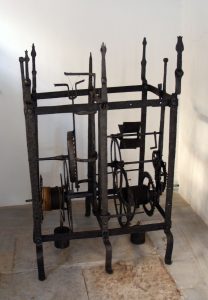
A daily life in its own time, practically defined by the Julian calendar and Byzantine time. (photo.)
The Byzantine hour, in the Byzantine time system, is set on the basis of the setting of the sun and thus defines the beginning of a day – the time 0:00:00 – daily, at sunset. Due to seasonal variations in the length of a day (i.e. one time the sun sets in June and another in December), zero hour can vary by several hours throughout the year.
On clocks, at sunset (at all times of the year), the minute hands should show 12 midnight exactly. In most monasteries the time is set every Saturday night and is valid throughout the following week.
The sunrise and sunset, while different and perfectly connected to each other, govern the daily cycle of divine worship, and regulate, in terms of time, everything that has to do with the daily life of the monks.
A variety of interludes introduce the practical side of the monastic state with the stages of food production and traditional or modern techniques and practices.
Among them are those of the gardener, the cook, the baker, the fisherman. They also serve any particular feature of the monastic diet, as found in several monasteries, and include meals according to the periods of fasting and confinement, with permitted and non-permitted food categories in limited numbers and at times according to the specific Typikon and Byzantine calendar. Thus, in the monastic diet, both the time of the presentation of the table and its duration are recorded in its specific characteristics.
Each moment is special, capturing the aspects of a life that constitute the daily routine of life there. The life of the monks who, by the power of the Holy Spirit, effectively contribute to the communion of life in Christ.
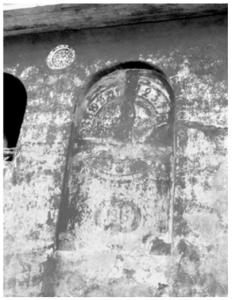
Trace of a painted clock plate in the Holy Monastery of Pantokrator, which bears the date 1815 and reproduces an older plate, of the 15th century, with 24-hour indications. (Faidon Hadjientoniou)